

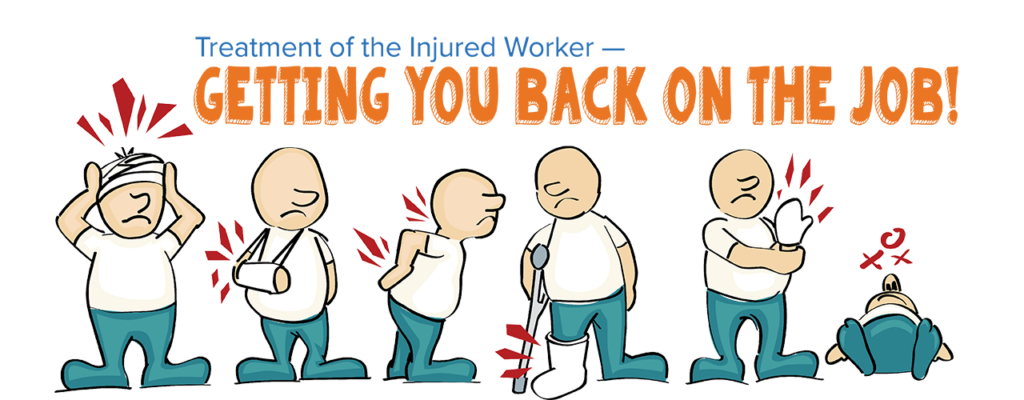
According to the Bureau of Labor Statistics, work-related injuries account for over 1.1 million missed days of work. Unplanned days off can be monetarily detrimental, especially if you have a lengthy recovery period ahead of you and physically cannot return.
Work-related injuries are scary to think about, but you can find relief quickly through physical therapy. A physical therapist will work with your place of employment to ensure that worker’s compensation will cover your services. At ARC Physical Therapy, all you’ll have to think about is recovering and regaining strength so you can comfortably return to your job.
We offer specialized rehab for work injuries that will enhance healing and reduce your risk of future injury. For more information, call our office to schedule a consultation today!


Do I have a work injury?
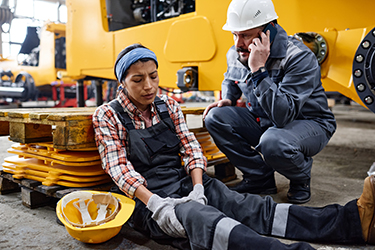
A work injury can be defined as anything that causes you pain or illness in your work environment. While this can sometimes be an obvious injury, such as a harsh fall off a ladder or an automobile accident while in a company vehicle, work injuries can also be more subtle. Sometimes, people may develop injuries without even realizing they are due to their occupation.
Repetitive stress injuries are common in office-related environments, typically due to improper posture throughout the workday. If you slouch at your computer for prolonged periods of time or tilt your head down to look at a keyboard or important files, you may experience back, neck, or shoulder pain. With time, your spine may even become affected — our spines all have a natural “S” curve but with continued poor posture in the workplace, it can turn into more of a “C” curve.
Tendinitis and carpal tunnel syndrome are also common work-related injuries due to repetitive stress on certain body parts. Tendinitis occurs when the tendons become inflamed by overuse. Carpal tunnel syndrome occurs when the median nerve in the wrist becomes pinched, typically affecting assembly-line workers and desk-job workers.
Laborious workers, or those requiring day-to-day heavy lifting, can also be affected by these conditions, as their physically strenuous days put constant strains on the body. Those with physically demanding jobs may also experience chronic pain that can be relieved through physical therapy treatments.
How will physical therapy benefit me?
The benefits of physical therapy are vast, and it has been proven that those who participate in physical therapy treatments tend to heal much quicker than those who do not. Rehab for work injuries is the best option when seeking fast recovery and optimal results.
At ARC Physical Therapy, we will create a personalized treatment plan for you, based on the specific needs of your condition. We will also provide “work conditioning” to train your body to perform in the correct ways while you’re on the job. For example, if continuous poor posture is the culprit for the lower back pain you’re experiencing, we will help you improve your posture through core strengthening exercises and stretches. We will also help you implement helpful techniques into your daily work habits to prevent your risk of further injuries, such as:
- Keeping a healthy weight.
- Breaking up your repetitive tasks.
- Scheduling at least 30 minutes of physical activity into your day.
- Practicing correct lifting techniques (with your legs, not your back!)
- Maintaining proper posture throughout the day.
- Listening to your body — take a break if you are in pain and seek the help of your physical therapist if it persists.
Let’s Get You Back to Work!
Our goal is to help our patients regain their peak levels of physical function, while simultaneously reducing their risk of future problems. If you are suffering from a work injury, contact our office to schedule an appointment with one of our highly trained physical therapists. We will help you recover and get back to work as quickly as possible!

Patient Success Story
“ARC changed my life! I fell about eight years ago on my tailbone and my body adjusted (incorrectly) to deal with the pain. I tried years of PT, chiro, salt baths, custom insoles, red light therapy, therapeutic massage, PRP treatments, cortisone injections, etc. and through a follow up doctor’s visit I was referred to ARC. ARC’s 1:1 personal approach and deep dive into my specific issues provided a targeted plan based on my progression after each visit. I was in horrific hip, back, and sciatica, pain, (walking, sitting, driving, standing) and received immediate relief (relative) but knew I needed long-term fixes in my retraining my muscles to lessen the pain and to avoid this pain in the future. Courtney is amazing! This wasn’t a boxed or packaged plan — Courtney dealt specifically with my many issues and prioritized them — starting slow — at the root core — literally my core — of the problem. She started me with the smallest little exercise — one tiny little exercise — and she added 1-2 new exercises each week. I religiously followed her instructions and within weeks I had less and less periods of pain. After months, I still follow her exercise plan and feel I am becoming stronger each day. Courtney literally rebuilt me from the inside out. She is amazing and I am so glad I didn’t give up and found ARC. I love walking, bike riding, yoga, Pilates (with care) and look forward to swimming and being fully active again. Thank you to Courtney for sharing your talents with the world. I will be forever grateful.”
— Lynne F.


The Importance of Staying Active
During Winter Months

Just because it is winter, it doesn’t mean you have to stay indoors! It is easy to want to stay in, nestled up in blankets, while it’s snowy and cold. However, remaining active in the winter months is just as important as remaining active during any other season!
Even something as small as taking a walk around the neighborhood to look at holiday lights or building a snowman with your kids can give you the amount of daily exercise you need. Exercise also helps loosens muscles that may become stiff in the winter months, making it easier to maneuver around in your orthotic or prosthetic device. Additional benefits to winter exercising include:
Immune system boost. According to the Centers for Disease Control and Prevention, even just a few minutes of outdoor exposure during the winter can help prevent against both bacterial and viral infections.
Sunlight intake. Vitamin D is important! Many people lack Vitamin D in the winter, due to a scarcity of desire to venture out in the cold. However, simply stepping outside can have positive effects. Sunlight can act as a natural mood booster, which may even increase motivation to exercise.
Absence of heat/humidity. Too much heat or humidity can sometimes feel suffocating. During colder months, this isn’t an issue. In fact, exercising in the cold can feel invigorating, as the crisp air can increase your energy. You run out of breath easier when it is hot and humid, so when that is taken away, you may be able to work out for longer periods of time.
Avoiding falls in the winter
While exercise in the winter is important, icy walkways unfortunately pose a higher risk of falling. This can lead to a higher risk of injury, such as strains, sprains, and tears. At ARC Physical Therapy, we want to make sure you stay as balanced this winter, so you can enjoy doing the activities of the season without fearing a harsh fall!
There are some steps you can take on your own to decrease your risk of sustaining a fall-related injury while participating in winter activities. These include:
- Our trained physical and occupational therapists can help you figure out if an additional assist would benefit you.
- Choose shoes with winter soles for traction. You can also get a pair of ski or walking poles to help keep your balance. As an added bonus, these poles will also help you burn extra calories since your upper body is getting a workout too.
- Add slip-on spikes to your boots on the extra icy days, to reduce your risk of slips and falls.
- Allow at least 10 minutes to warm up when exercising in the winter. When it’s cold, your heart and muscles need more time to get ready and prepare for exercise – this can help you avoid unwanted injuries.
- No matter what winter activity or exercise you’re partaking in, warm-ups should always include a combination of low-intensity movements that will make the physical activity easier to perform. For example, if you decide to go on a walk or run through the winter wonderland that your street has become, you could warm up with lunges, squats, arm swings, or jumping jacks, making sure to also get a good stretch in your calves and thighs. This will keep your body warm while you exercise and will be a good way for you to feel out the terrain beforehand to see if it’s too icy.
- Add in any additional assists, as needed. Snow and ice are the main culprits for many injuries during the wintertime, which is why it is important to add to your stability. Ice cleats or rubber-soled boots can provide you with grip and support. Using a cane or crutch can also help in remaining steady on frozen terrain.
- Our trained physical and occupational therapists can help you figure out if an additional assist would benefit you.
At ARC Physical Therapy, we can design specialized treatment plans for anyone who may need a little extra push in staying active during the winter. Contact us today to learn more!
Quick & Easy Healthy Recipe
Feta & Herb salmon

Immerse your taste buds in a crescendo of flavors as rich salmon meets the tangy embrace of feta and the aromatic touch of fresh herbs.
Ingredients
- 1 salmon fillet thawed
- 1/2 cup Feta Cheese
- 1/4 cup roughly chopped fresh parsley
- 2 Tbsp roughly chopped fresh chives
- Juice from half a lemon
- 1/8 tsp salt
- Pinch of pepper
Preheat your oven to 400 degrees. Line a baking sheet with parchment or foil for easy clean up. Combine parsley, chives, Feta, lemon, salt and pepper on cutting board. Run knife through the combination several times, chopping up all ingredients to mix. Spread combined ingredients on salmon fillet. Bake for 20 minutes or until cooked through. Serve!
Exercise of the Month
Bilateral Horizontal Shoulder Abduction with Band
Start by standing up straight and holding one end of a resistance band in each hand. Raise your arms straight out in front of you. Pull your shoulder blades together. Spread your arms straight out to your sides, pulling the band apart. Once you have reached your maximal range of motion, let your arms come back in.








Let’s Get You Better ASAP!
Don’t let pain dictate your life. Take the first step towards reclaiming your mobility and well-being with our expert support. Start your journey to a healthier you today.